
Ethnic Grocery Anchored Retail - An Area of Outperformance
Ethnic grocer-anchored retail centers are emerging as high-performing investments, driven by strong demographic trends, resilient grocery demand and higher yields compared to traditional grocery-anchored centers, particularly in diverse and growing Sunbelt markets.
December 21, 2022

Introduction
Recently, retail real estate has been among the more uncertain sectors due to the long-lasting effects of the COVID-19 pandemic. Despite the uncertainty in retail demand, the demand for groceries has stayed strong as in 2021, grocery sales in the United States totaled $783.1 billion up 43% from a decade prior. [1] Historically, grocery anchored retail centers have fared well through economic downturns with sales continuing to increase steadily and occupancy remaining above 90%. Additionally, inflationary environments can grow sales for grocers since the cost of groceries is often cheaper than the cost of dining out at restaurants. This resiliency allows the grocer subsector to have some of the most consistent income and appreciation returns out of all retail over the long term. [2]
Grocery anchored retail is also one of the retail subsectors least impacted by the flight to societal eCommerce adoption. Only 11% of all grocery sales are conducted through eCommerce platforms and most of those orders are processed and fulfilled out of local brick-and-mortar grocery stores as opposed to cold storage facilities mitigating a lot of grocery stores’ obsolescence risk. [3]
Nonetheless, not all grocery anchored centers are alike. Recently, institutional capital has begun to flow to ethnic variations of grocery stores, with an emphasis on Hispanic and East Asian grocers. With the increasing attention to the outperformance and resiliency that ethnic grocery anchored retail has had, more demand has been drawn to the sector as an attractive area for investment.
What are Ethnic Grocers?
A standard grocery anchored retail center operates by attracting consumers to the grocer anchored tenant which is generally the largest in the retail center and then consequently drawing said consumers to smaller in-line stores. Ethnic grocery anchored retail centers operate in a similar manner to a standard grocery retailer in concept. The cultural flare of the grocery retailer results in the in-line tenants having a similar cultural association to the anchor tenant. Ethnic grocer anchored retail centers in the United States are often positioned in regions with diverse immigrant and ethnic communities. The most common of these are Hispanic American and Asian American demographics.
Ethnic grocers distinguish themselves from regular grocers by offering a wide variety of cultural products and ingredients that consumers can use to cook a wide variety of ethnic foods. Some ethnic grocers are family-owned small businesses, but there are numerous national chains including Asian stores H-Mart and Mitsuwa Marketplace as well as Hispanic stores such as Cardenas, Fiesta Mart, El Super, Mi Pueblo and El Rancho.
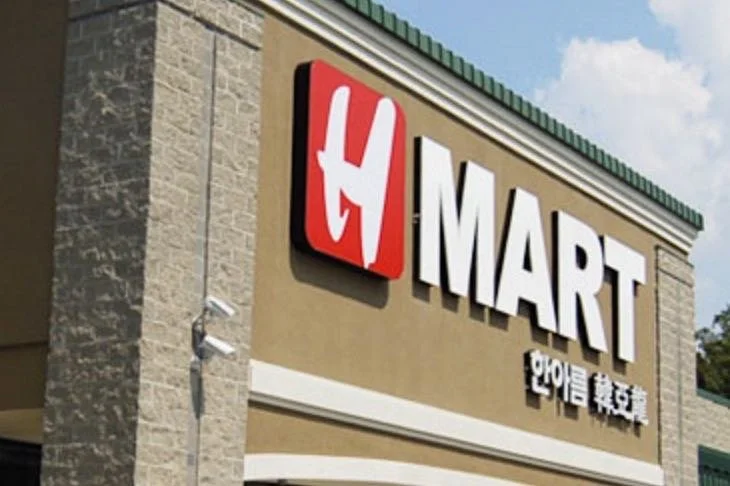
H-Mart, an Asian ethnic grocer located in Seattle, Washington
Demographic Trends Affecting Ethnic Grocer Demand
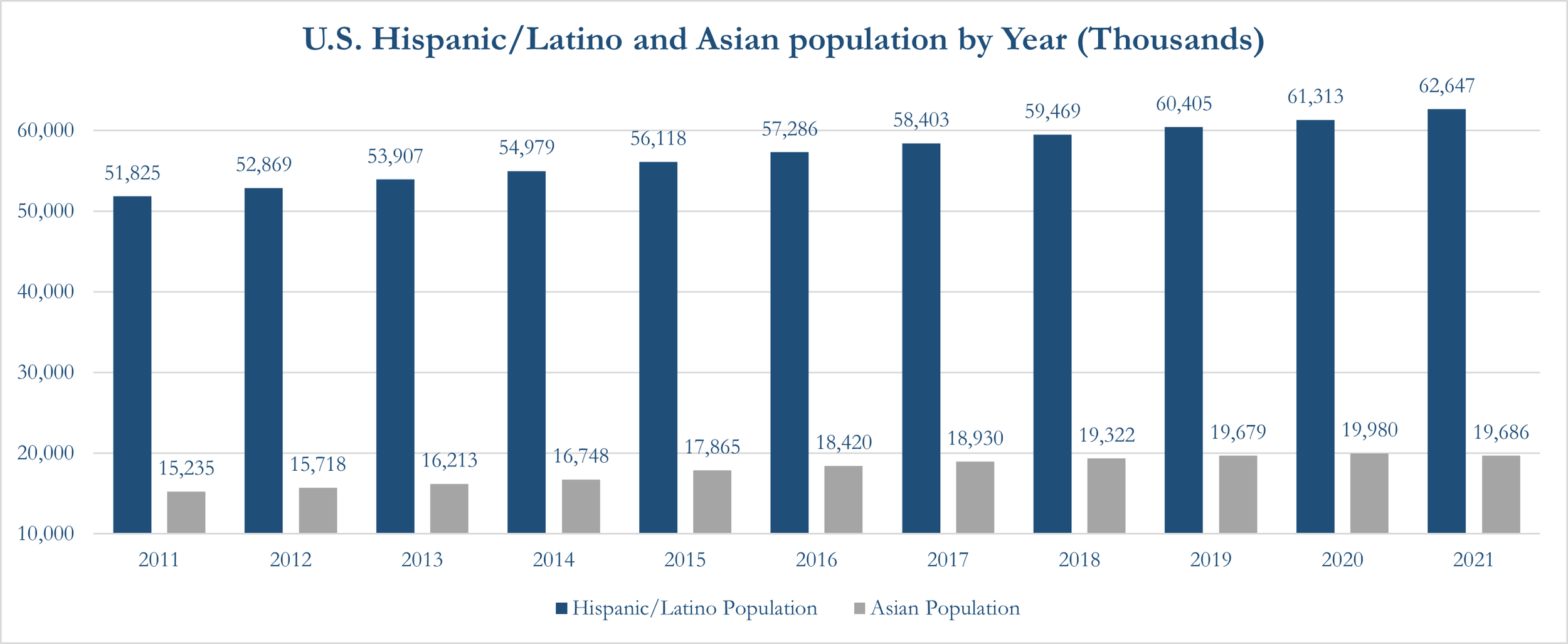
Demographic shifts in the United States during the past decade (as outlined below) have been significant and the impact of the changing demographics are a major factor highlighting the attractiveness of Ethnic Grocer Retail.
From 2011 to 2021, the United States population grew from 311.6 million to 331.9 million resulting in a 6.5% increase over the ten-year period. In that same time, the population of Hispanic Americans grew from 51.8 million to 62.6 million (a 20.8% increase) and the population of Asian Americans grew from 15.2 million to 19.7 million (a 29.6% increase). This explosive growth in minorities in the United States is one of the strongest drivers for ethnic grocery store demand. [4]
The buying power of Hispanic American consumers is forecasted to increase to $2.6 trillion in the United States over the next three years [5] and their income has been growing at 6% per year from 2005-2020[6] signaling that Hispanic Americans are quickly becoming one of the most powerful consumer bases by ethnicity in the United States. Hispanic American shoppers typically favor more dry groceries and produce and are also more likely to purchase organic groceries than the American shopper of all other ethnicities. [7] Hispanic American shoppers also average more shopping trips per month than any other ethnicity in the United States with 4.4 monthly trips compared to Americans of all other ethnicities who take an average of 4.0 monthly trips. [8] Hispanic Americans spend approximately $81 per grocery store trip which is 14% more than Americans of other ethnic backgrounds. [9]
The Asian American consumer is also very powerful and their buying power is forecasted to increase to $1.6 trillion in the United States in the next 3 years, an increase of 33% from $1.2 trillion in 2020. [10] The average Asian American household has a 41% higher income than households of Americans with other ethnic backgrounds, and spends 29% more of their income on food. [11]
Sector Analysis
Investment into ethnic grocers has been increasingly more common as demographic shifts and strong overall grocer performance have made them attractive for investors. From 2015 to 2020, ethnic grocers grew their sales at a rate of 3% annually and captured $44.3 billion in sales revenue with an average 3.1% profit margin. The sector is expected to outperform United States GDP growth by 1% per year. [12]
Successful ethnic grocers often aim to strategically place their stores into areas with high ethnic population growth. Ethnic grocers can connect with their targeted cultures in many ways such as bilingual support, community outreach programs, and local events to gain exposure and to sample their goods.
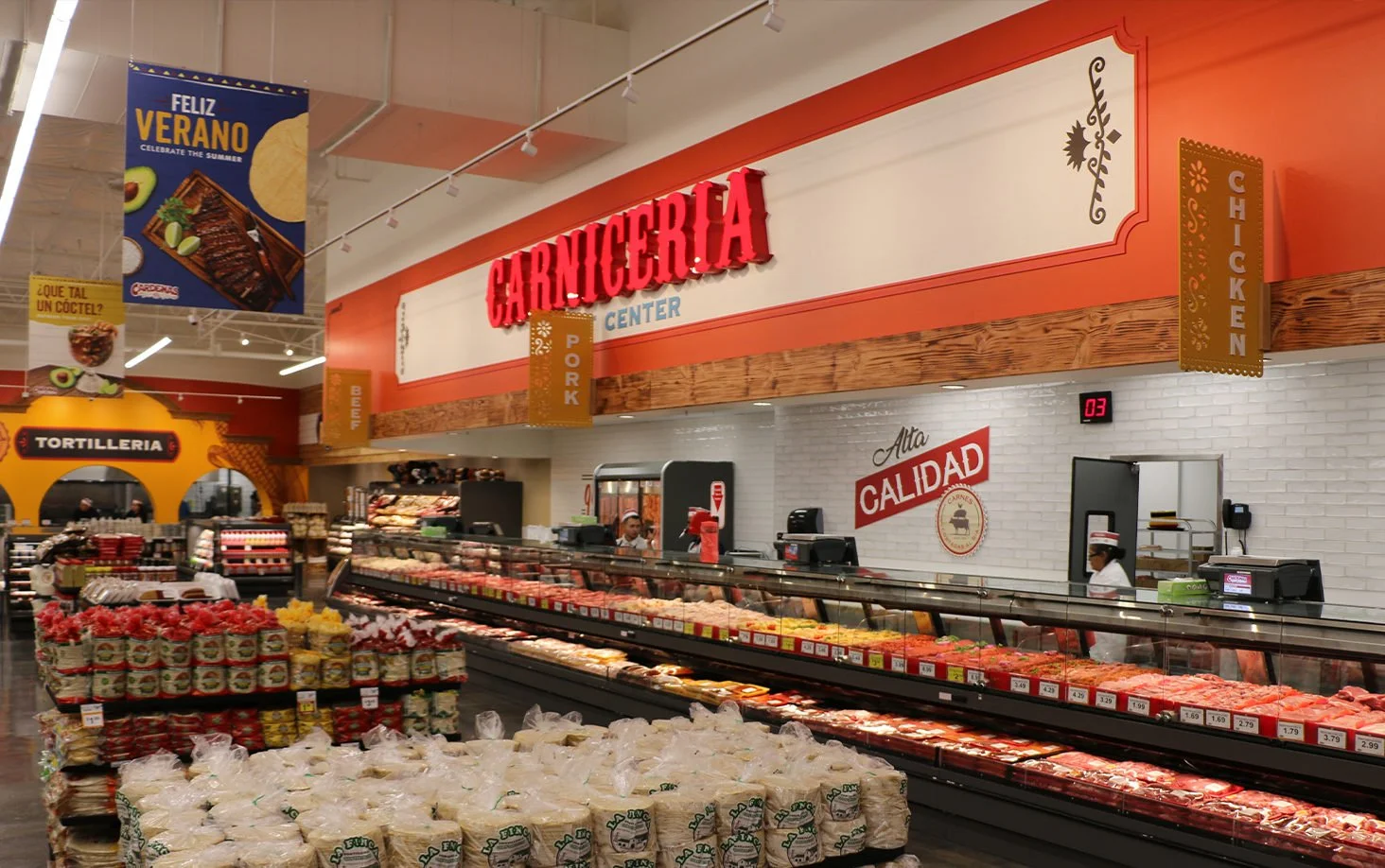
The interior of a Cardenas grocery store with which provides its customers with bilingual support.
Ethnic grocer centered retail centers are often successful because of their ability to bring together an ethnic community. A combination of the grocer anchor as well as surrounding small businesses which either have the same ethnic theme or are owned by an ethnic owner create a sense of community within the retail center. Consumers often go into the retail center for one purpose but end up staying to meet new people, catch up with old friends or experience the various cultural stores and restaurants which occupy the in-line space around the anchor. This benefits the consumer of the retail center and the investor since there will always be the potential for a very desirable and diversified tenant mix.
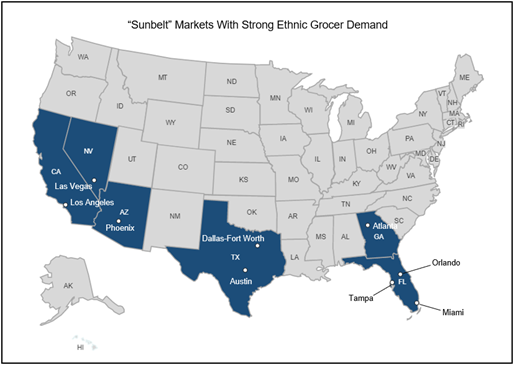
Ethnic Grocers thrive in markets with higher-than-average ethnic populations, large population and land area, desirable living conditions, growth potential and institutional interest to attract capital. Many of the cities that satisfy these needs are in the Sunbelt region of the United States since over 50% of the Hispanic population in the United States reside in either California, Texas, or Florida. [13] The broader Sunbelt markets where ethnic grocers are in high demand include Dallas, Fort Worth, Atlanta, Miami, Los Angeles, Tampa, Austin, Orlando, Phoenix and Las Vegas. Other attractive opportunities are in areas with high Asian American populations including Boston, New York, Washington DC and Northern California/Bay Area.
The influx of institutional interest and capital into the Ethnic Grocer Retail sector has been very beneficial. Since it has become more institutionalized, many major concerns from investors such as credit and sales growth have been addressed after mergers and acquisitions of major ethnic grocers have become more common. In 2018 for example Acon Investments, a private equity firm, acquired El Super and Fiesta Mart which in 2020 had $3.2 billion in sales revenue. Sales from the two grocers then proceeded to grow by 22% in the following year.[14] Today, El Super and Fiesta Mart have a combined 124 locations across the United States. Mi Pueblo and Cardenas were both purchased in a joint venture between KKR & Co. and Victory Park Capital Advisors in 2016 as well.[15] Institutional ownership of ethnic grocers is demonstrated by more than just private equity however, as conventional grocers have strategic purchases in ethnic grocer chains also. Albertsons for example purchased a 45% stake in El Rancho Supermercado in 2017 for $100 million.[16]
Ethnic Grocer Anchored Real Estate Analysis
The preceding information lays out a substantial framework for a viable investment in ethnic grocer anchored retail centers. Investors can expect higher net operating income yields in ethnic grocer anchored retail centers in excess of 200-300 basis points when compared to traditional grocer anchored centers. This substantial increase in yield comes with credit anchor tenants and high tenant diversification around the necessity based in-line tenants. A strategy of investing in ethnic grocery anchored centers should be focused on areas with high ethnic populations and significant macro-demographic tailwinds. Many markets throughout the Sunbelt have high ethnic populations and are projected to have a large increase in ethnic populations in the coming years.
Lease structures for ethnic grocers are similar to conventional grocers but can vary slightly depending on the market and owner of the property. The anchor tenants typically sign long term leases around ten years in length with contracted rental increases of 2-4% per year. Lease terms can vary but it is common to see triple-net leases for anchor and in-line tenants. Percentage rent is generally uncommon but does exist in some of the less institutional ethnic grocer stores. This could be seen as a drawback of the sector due to highly inflationary environments leading to net negative rent growth over time.
Conclusion
Ethnic grocer anchored retail centers have been higher returning alternatives to conventional grocer anchored centers in recent history without considerable credit risk. These assets can be a very attractive area for investment due to significant demographic tailwinds in demand, steady income and appreciation returns during any economic conditions and the strong congregation point it can provide to an ethnic community.
Ethnic grocer anchored retail can be a great investment when well located in a growing market, preferably in a Sunbelt city with a high population of ethnic citizens and a diverse tenant mix. Investors should be aware of the inflation risk that can come with long-term leases without percentage rent but can generally expect very strong income and appreciation return in these sorts of assets over time. ORG believes that investment into ethnic grocer anchored retail centers with an experienced and adept management team could provide increased diversification in a retail portfolio.
[1] FRED Economic Data | St. Louis Fed, 2022, “RSGCS,” FRED St. Louis Fed, fred.stlouisfed.org/series/RSGCS.
[2] Loretta Clodfelter, 2022, “Inflation to provide tailwind for grocery-anchored retail,” IREI, irei.com/publications/article/inflation-provide-tailwind-grocery-anchored-retail/.
[3] Loretta Clodfelter, 2022, “Inflation to provide tailwind for grocery-anchored retail,” IREI, irei.com/publications/article/inflation-provide-tailwind-grocery-anchored-retail/.
[4] USA Facts, 2022, “Our Changing Population: United States,” usafacts.org, usafacts.org/data/topics/people-society/population-and-demographics/our-changing-population?endDate=2021-01-01&startDate=2011-01-01.
[5] Redaccion Bloomberg Linea, 2021, “Purchasing Power of Hispanics in the U.S. Has ‘Clear Impact’ on Economy,” Bloomberg Linea, www.bloomberglinea.com/2021/12/27/purchasing-power-of-hispanics-in-the-us-has-clear-impact-on-economy/.
[6] The Associated Press, December 10, 2020, “Location, education propel Asian American income growth in the US,” NBC News, https://www.nbcnews.com/news/asian-america/location-education-propel-asian-income-growth-u-s-n1250722
[7] Statista Research Department, 2021, “Hispanics in the U.S.: Shopping Behavior – Statistics & Facts,” Statista, www.statista.com/topics/1861/hispanics-in-the-us-shopping-behavior/#dossierKeyfigures.
[8] D. Tighe, 2020, “Hispanic Grocery Shopping Purchases by Product,” Statista, www.statista.com/statistics/899892/hispanic-grocery-shopping-purchases-by-product-claim-us/.
[9] Parker Morse, 2018, “Why the Hispanic Grocery Market is One to Watch,” Midwest independent Retailers Association, miramw.org/business-news/why-the-u-s-hispanic-grocery-market-is-one-to-watch/
[10] Rosa Escandon, 2020, “Asian American Consumer Market is Now $1.2 Trillion And What That Means For Digital Brands,” Forbes, www.forbes.com/sites/rosaescandon/2020/05/22/asian-american-consumer-market-is-now-12-trillion-and-what-that-means-for-digital-brands/?sh=6bd054333620.
[11] Rosa Escandon, 2020, “Asian American Consumer Market is Now $1.2 Trillion And What That Means For Digital Brands,” Forbes, www.forbes.com/sites/rosaescandon/2020/05/22/asian-american-consumer-market-is-now-12-trillion-and-what-that-means-for-digital-brands/?sh=6bd054333620.
[12] Diment, Dmitry. "Industry Report OD4333: Ethnic Supermarkets." IBIS World, August 2020.
[13] Pew Research Center analysis of U.S. Census Bureau Vintage 2019. www.pewresearch.org/facttank/2020/07 /10/hispanics-have-accounted-for-more-than-half-of-total-u-s-population-growth-since-2010/ft_2020-07-
10_hispanicgrowth_04a/.
[14] Progressive Grocer. "Pandemic-Fueled Record Growth in 2020: The PG 100." May 2021.
[15] Springer, Jon. "Private equity firms to acquire Mi Pueblo, Cardenas." Supermarket News, November 16, 2021. www.supermarketnews.com/retail-financial/private-equity-firms-acquire-mi-pueblo-cardenas.
[16] "Albertsons Companies, Inc. Form 10-K for the Fiscal Year Ended February 24, 2018." EDGAR, Securities and Exchange Commission, 2018. www.sec.gov/Archives/edga r /data/1646972/000164697218000017 /acifyl 710-k.htm.